
Instrument clusters
Molded appliance components, with finishing requirements defined around appearance, handling and end use. Application scope ↗
 PRECISION
Trimming and dual-colour tampo printing, with deburring, polishing and painting in the wider published finishing scope. Define the visual standard, functional surfaces and decoration requirements alongside the molded-part drawing.
| Capability | Scope & engineering considerations |
|---|---|
| Trimming & deburring | Remove agreed excess material and define acceptable gate vestige, edge condition and handling marks. The published production scope includes deburring. Service details ↗ |
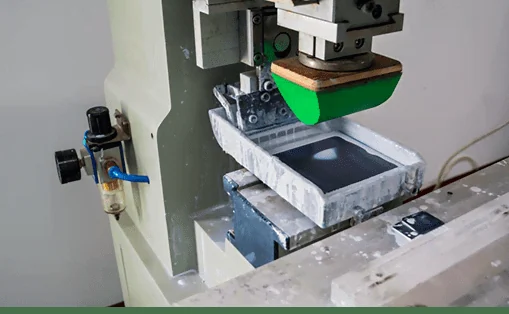
| Dual-colour pad printing | Tampo printing transfers artwork from an etched plate through a silicone pad to the component. GIH’s confirmed offering includes dual-colour printing. Printing process ↗ |
| Curved & irregular surfaces | Pad printing can address suitable non-flat surfaces. Print size, pad access, artwork distortion, registration and the substrate/ink pairing require review. Service details ↗ |
| Polishing & painting | Included in the published finishing portfolio. Agree the surface preparation, visual sample, colour, gloss and protected areas for the specific component. Service details ↗ |
| Inspection & acceptance | Agree the visible surfaces, inspection conditions, permitted defects and any adhesion or durability test before production. Test scope is project-specific. |
Pad, plate, ink and component positioning determine the printing route. Multi-colour work requires control of registration and the sequence between colours; durability depends on the substrate and ink. Tampo-printing considerations ↗
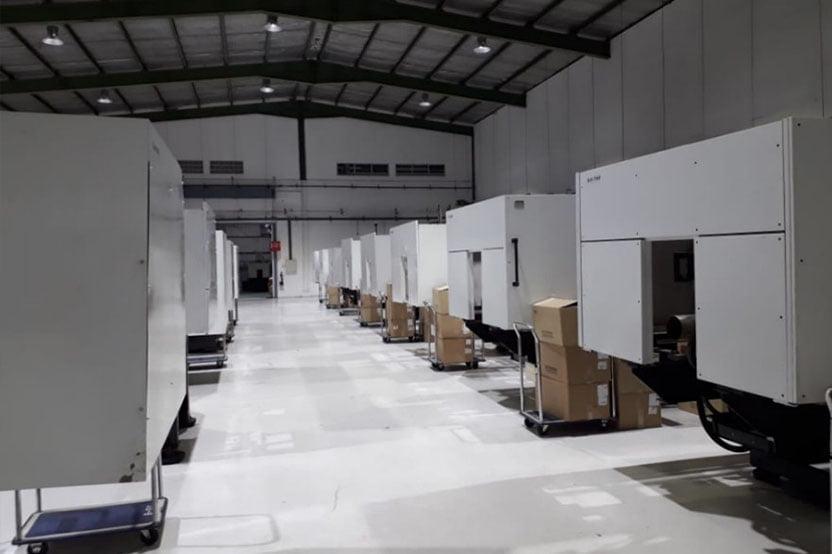
Component and assembly experience relevant to your next project.
Molded appliance components, with finishing requirements defined around appearance, handling and end use. Application scope ↗

Molded-component experience supports application-led discussions on decoration and finishing. Application scope ↗
Provide approved artwork, colour references, cosmetic zones and handling restrictions.
Agree pad access, component positioning and the preparation of the surface.
Compare representative samples with the agreed visual and functional requirements.
Confirm inspection, handling and protective packaging for finished components.
Quotation target: 1 week from a complete technical brief. Production, tooling and qualification schedules are scoped separately.